Wednesday, March 26, 2014

Animal Welfare


In 1998 Council Directive 98/58/EC gave general rules on the protection of all farm animals specifically kept for the production of food, wool, skin, or fur. This also included animals used for other farming purposes such as, fish, reptiles, or amphibians. These rules originated from the European Convention for the Protection of Animals kept for Farming Purposes. These rules are seen within the “Five Freedoms” that are adopted by the Farm Animal Welfare Council. These Five Freedoms include:

“Freedom from hunger and thirst - access to fresh water and a diet for full health and vigour
Freedom from discomfort - an appropriate environment with shelter and comfortable rest area, 
Freedom from pain, injury and disease - prevention or rapid treatment,
Freedom to express normal behaviour - adequate space and facilities, company of the animal's own kind, 
 Freedom from fear and distress - conditions and treatment which avoid mental sufferings.”


Of these Five Freedoms, the first freedom from hunger and thirst would seem the easiest for farmers to comply with. “Access to fresh water and a diet full health and vigour” seems to also be the most important in this instance. It is also in their best interest to keep their livestock, especially in the production of food, very well feed. The last freedom from fear and distress may be the hardest for farmers to comply with because it is a very hard aspect to measure whether not your livestock has a mental suffering is hard especially when you may have a large amount of livestock. It is hard to tell even when humans are having mental suffering let alone a fish. Overall, this is the hardest freedom to comply with because it is difficult to measure especially in smaller non-mammals.  

            “Freedom to express normal behavior” means that the animals are allowed to practice their natural behaviors, rather than being forced to act otherwise. Normal behavior for a cow is to roam a field, not be kept in a small confined space for 24 hours a day for seven days a week. That is not normal for a cow. In the case for broilers, it would be allowing farm animals the ability to partake in behaviors that would normally be doing if they were not farm animals. Additionally, being in the presence of animals that are of the same species allows for a more “normal” atmosphere. The freedom to express normal behavior overall helps with mental suffering by giving them overall freedom to partake in natural behaviors.

When it comes to farm pigs, it is a banned practice to use individual stalls for pregnant sows and gilts, specifically starting from 4 weeks after service to one week before the expected time of the birth of a litter. It also banned to use chains or ropes to restrict the movement of pigs. The humane Society mentioned that Arizona, California, Florida, Maine, and Oregon all have regulations against tether pigs, however, some range from only pregnant pigs, all farm animals, or calves raised for veal. However, in the United States the majority of pregnant sows are kept in confined and individual gestation crates for most of their lives. In the New York Times, they mention that nine states and 60 companies have banned the use of gestation crates.
           
Mercy for Animals accuses Rosewood Farms of killing piglets by slamming them o concrete floors, castrating them without painkillers, and roughly beating and curing at sows. They also accuse, Rosewood Farm of restricting sows to gestation crates for their entire lives. They also mentioned that the mental state of the pigs at rosewood Farm was also a large issue concerning their behavior of banging their heads against the bars and biting the bars. The investigator also claimed that the pigs would be in such a mental state that they would turn to eat their own babies.

When compared to the practices banned by the European Union, Rosewood Farms would be severely rejecting the E.U.’s bans. Considering all of the Five Freedoms it seems that most of these if not all were probably being neglected. They were not granted freedom from discomfort by being kept in small refined gestation cages. They were not granted freedom from pain or injury granted that physical abuse of the pigs and piglets was a major issue in the findings and also the fact that they were castrated without painkillers. They were not granted freedom of normal behavior or the freedom from distress or fear because they were not partaking in any normal behaviors by the observation of the investigator that they were supposedly eat their own piglets and banging their heads against bars.


            Rosewood was a Walmart supplier, and the reaction of Walmart was that they found the behavior of the farm unacceptable but were unwilling to change their policy. They stated that they would be reviewing the situation on their own. They went on to state that they were working toward a model that would be respectful of both farmers and animals and still meet the consumers view of how the animals should  be treated. Walmart does not change its policy on the use of two feet crates being used for sows, but 60 companies including McDonalds, Burger King, and Costco have made a ban for the suppliers. 

Wednesday, March 19, 2014

Food Labeling


FDA Regulations on Labels

The FDA has strict guide lines for labels such as reduced fat, high fiber and low sodium. They come into play when the label is figuring out how much is in a serving of their product. “Low” and “Reduced” do not mean the same thing.  There are percentage guidelines and amount by the gram guidelines depending on which line you are looking at. For a product to be considered “Cholesterol Free” it must have less than 2 mg per RACC per serving. For it to be in the “Less” category it must have 20 mg or less per RACC per serving and for a “Reduced” label it must have 25% less per RACC than another referenced food deemed appropriate for comparing. Or in other words the “reduced” version must have 25% less fat than the original. (RACC stands for Reference Amount Customarily Consumed).  The reduced fat amount usually has more fat than the low fat amount because the label “low fat” can only be used if there is less than 3 grams of fat per serving and 30% or less of total calories. Anything labeled “High Fiber” must have more than 5 grams of fiber per serving. This is a label producers want known that it is high because fiber helps to regulate and ‘clean’ your system. High fiber amounts usually have to be processed specifically to add that amount into a product.
“Natural” and “Organic” frequently get mistaken for the term healthy. “Healthy” has strict criteria that the product must meet of the amounts of fat, cholesterol, vitamins and other nutrients on the label. “Organic” refers to the origin of what it was made with and “natural” foods can have a high amount of fat or cholesterol in it. 

Specific terms saying that a food helps your heart cannot be used unless there are studies that back the claim. However labels implying healthy choices can be used without regulation. Terms in this case include ‘may help lower cholesterol’ or ‘leads to a healthy heart.’ In a restaurant the term “heart healthy” can be used as long as the nutrition label for that food is not required up front and on the menu but can be provided upon request from the customer. 

GMO Labeling
The GMO label is the subject of hot debate right now. It is estimated that about 70% of all processed foods contain a GM ingredient such as corn or soy. Currently the US does not require GM food or products to be labeled but it will be voted on in the near future. Europe does require GM foods to be labeled and this has allowed consumers to keep the amount of GMOs consumed very low.


The New UK Label System
Just like the US, the UK has been battling obesity and they have decided to use the ‘traffic light’ labeling system on their food packaging to help. Instead of many numbers showing amounts of different components that may not mean anything to many consumers the labels will now be labeled with high, medium or low. The individual calories, fat, salt, sugar, etc. will still contain the amount that is in the labeled food but will be surrounded by a green, yellow or red box with the high, medium and low labels.
The unhealthiest foods would theoretically have more red labels and the healthier foods would have more green and yellow labels. If this labeling technique is voted in then the debate and fight for a better front of the box labeling system is likely to end because the colors and larger print would catch the eye and be easier to quickly understand. It would be what they were fighting for and it would make it easier to make healthier choices in the isles. There are already many front of the package labeling systems in pace but this traffic light system would make it less confusing by using one standard method and it would make the rest of the foods get that label on the front of the box.

Trading Differences because of Labels
The US and Europe have been in heated debate for a while about importing and trading different types of cheeses and now a full free trade pact is halted because of origin labeling of Parmesan. Europe wants the label Parmesan to be reserved for cheeses that originate from Italy as we have agreed Champagne is reserved for sparkling wines originating from France but the US does not want that. The US argues that the term Parmesan entered the common usage a while ago. I agree with the US that Parmesan should not be restricted just as the term hamburger and feta are not. This protection of a widely used term could be applied to many other products that are manufactured in many different places and could cause the product-by-product based recognition discussions to fall.
There is already EU discussions with Canada that could ban many US products from their market. As a final thought, geographically marked products are selling better than generic competitors and can hold their own in the competition.

Changes to the US Label
Something I am sure that anyone watching what they eat can relate to is being fixed, the label on the back of all of our foods is going to be getting a makeover. The most obvious and possibly the most important change will be that the serving size for the amount of calories in a container is going to match the container’s individual size and fit closer to an amount that we actually eat in one serving. Potassium and Vitamin D are going to start to be required on the label since there are people in the US who are not getting enough of them and Vitamin A and C will be optional. The daily values of a few of the nutrients will also be tweaked. Sodium and dietary fiber are two that the percent daily value on the label will be revised to help consumers make better choices for a total daily diet. There are a few lines about fat on the label but now “Calories from Fat’” will be removed because research has shown that the type of fat is more important that how much fat is in a serving. “Trans Fat” and “Saturated Fat” would stay and draw more attention because of this. 
These changes are being made based on new research and studies in order to help consumers make better choices. Personally, I would vote for it just for the rule of changing the serving size. I have never wanted to start counting calories because you need a measuring cup just to get started and be able to estimate your numbers correctly. Many weight loss programs require you to do this and keep up with your serving sizes and now it is easier to do. For anyone just counting calories you don’t have to continuously multiply and measure out small servings, you can drink the full can of soda or take a handful of cereal and find your calorie amount in a simpler way. Even for the regular consumer this can make a small impact. The label will be bigger and people want to eat healthier even if they do not count calories. Larger, more realistic serving sizes will help people take a quick second look at what they are buying.

Sunday, March 2, 2014

The Environmental Impacts of Agriculture


photo by jimmedia on Flickr
      “The farmer is considered simple as a producer who must cut his costs and raise his efficiency by every possible device, even if he thereby destroys – for man-as-consumer – the health of the soil and the beauty of the landscape…What man-as-producer can afford is one thing; what man-as-consumer can afford is quite another thing.  But since the two are the same man, the question of what man – or society – can really afford gives rise to endless confusion.”
from Small is Beautiful, by E.F. Schumacher (1)
     Deforestation, water contamination, loss of biodiversity, increased greenhouse gas emissions, human poisonings, soil erosion – just a few of the crimes that modern agriculture has been accused of over the past half-century.  And all of these things are true – agriculture does cause these things.  The way that we humans are growing food right now, especially in the West, is definitely harmful to the environment. It’s unsustainable.
     But farmers and others in the agriculture industry may say to environmentalists – “But we feed you!  We couldn’t support the growing global population any other way!”  And they might be right as well.  In the middle of the past century, Malthusian scholars, such as Dr. Paul Ehrlich, predicted that agricultural production wouldn’t be able to keep up with the growing population and that wide-spread famine was imminent. Clearly, there was no global famine in the 1960s or 70s, because agriculture was able to keep up, in a set of advancements referred to as the Green Revolution. Cereal yields in developing countries, especially in Central America and in Asia, sky-rocketed.  But along with increased yields (and, presumably, hundreds of thousands of lives saved) came chemical fertilizers, pesticides, and a growing middle class that is still growing today, and is eating more meat than ever.
     In fact, the production of meat is currently the second-largest source of greenhouse gas emissions, globally.  Livestock production accounts for 18% of global greenhouse gas emissions. When you combine that with the percentage of greenhouse gas emissions from non-animal agriculture, the total percentage is 30%. As a planet, we produce more greenhouse gases in raising our food than in producing energy (21%) or transportation (14%) (2). Livestock raised on grains are consuming calories that we will probably need for human use in the future.  If everyone on the planet switched to vegetarian diets, there would be a 50% increase in calories available for human consumption (3).
     Obviously, reducing meat production isn’t the only way that our agricultural system should become more sustainable. Jonathan Foley outlines five solutions: stop expanding the area of land that agriculture uses; increase agricultural yields in Africa, central America and eastern Europe; use water, fertilizer and energy more efficiently; reduce meat production; and decrease food waste.  A combination of these solutions, plus others, will be necessary to feed all of the people living on the planet in the next 50 years (3).
     These solutions may seem impersonal and inapplicable to the many people, except for the last two.  I have already discussed meat production, and now I would like to quickly discuss food waste.  Reducing food waste will be important in making sure we have enough food for the future, and here in North America, reducing food waste is certainly achievable.  According to various estimates, 30-50% of the food in the American food system is wasted (that is, it is produced but not consumed by people).  Because crops losses due to natural disasters and pests have been reduced, most of that waste is the fault of consumers, retailers, or restaurant management.  We all want perfectly red apples, unbruised bananas, and crisp lettuce, but few natural products live up to our un-necessarily high standards, and so they are thrown out.  As consumers, we must learn to “settle,” if that is what you wish to call acceptance of natural variation in the size and appearance of natural food products.  But some food waste is inevitable, and so we must also get rid of inedible organic matter by composting, not by filling up yet another landfill – and then use that compost to grow more food.

     Agriculture is necessary to human survival, and must become more efficient to feed even more people. But even as food production and food access must increase, the environmental damage caused by agriculture must decrease.  It’s not an option, or an ideal, or a utopian dream. Sustainable agriculture is a necessity. It is the future.
  1. Schumacher, E. F. Small Is Beautiful; Economics as If People Mattered. New York: Harper Perennial, 2010. Print.
  2. Fiala, Nathan. "The Greenhouse Hamburger." Scientific American 300.2 (2009): 72-75. Academic Search Alumni Edition. Web. 2 Mar. 2014.
  3. Foley, Jonathan A. "Can We Feed The World & Sustain The Planet?." Scientific American 305.5 (2011): 60-65. Academic Search Alumni Edition. Web. 2 Mar. 2014.

Wednesday, February 26, 2014

Food Safety in America: How Safe is Our Food?

http://barfblog.com/2013/02/lettuce-sickens-hacks-hack-leafy-green-marketing-agreements-set-a-bar-but-its-still-too-low/lettuce-tomato-skull-3/


Ten Facts to Know about the U.S. Food Safety System

1. The Centers for Disease Control estimates that each year 76 million American get sick, 325,000 are hospitalized, and 5,000 die from food-borne hazards. Food-borne illness is surprisingly common in the U.S. and can be as little as mild cramps or diarrhea. It is suggested that countless occurrences go unreported each year because not all food-borne illness is severe enough for treatment and may last for a very short period of time. The individuals most at risk are children, senior citizens, and the immunocompromised. They are much more likely than healthy adults to become severely ill from food-borne hazards.

2. The USDA (United States Department of Agriculture) handles meat, poultry, and dairy. The FDA (Food and Drug Administration) handles everything else. In the period 1990 to 2006, more food-borne illness outbreaks fell under the jurisdiction of the FDA (67%) than under the USDA (27%). Of the country’s food supply, the FDA handles about 80% and the USDA handles 20%.


3. Despite the distribution of outbreaks, the USDA gets twice the budgetary expenditures for food safety programs and inspections that the FDA gets.

4. The FDA inspects food processing facilities once every 10 years. The USDA inspects meat and dairy facilities daily. This is due to the difference in funding.

5. There is confusion and discrepancy over which agency handles certain products. For example, frozen pizza is divided between the agencies based on the pizza toppings. Frozen cheese pizza facilities are inspected by the FDA (about once every 10 years). Frozen pepperoni pizza facilities are inspected by the USDA (daily).

6. The FDA is empowered (by the Federal Food, Drug and Cosmetic Act) to intervene only when food is found to be adulterated or misbranded. In comparison, the USDA which must approve meat products for them to be sold.

7. Hazard Analysis and Critical Control Points (HACCP) systems are currently in place for seafood, juice, meat, and poultry products, but not other products. This analysis system helps to assure safety and quality of food products. 

8. Unfortunately, less than 1 percent of food imported into the U.S. is inspected. Only foreign meat must be approved for sale in the U.S. Additionally, the FDA cannot inspect processing plants in other countries unless invited. This lack in foreign food control can result in a loss in quality and provide a safety risk.

9. The August-September 2006 E. coli in bagged spinach outbreak (that killed three people) was due to contamination of the environment in which the spinach grew. Manure piles were found near the spinach farming operation. E. coli is commonly found in the intestinal tract of animals and humans. Only specific strains, like the E. coli O157:H7 strain found specifically in the gut of cows, causes illness in humans. These “bad” E. coli strains can easily be spread by manure runoff and has become increasingly common in produce-related outbreaks. Unfortunately, although farming falls under the FDA, the FDA has limited control over farming operations.

10. The FDA does not have the power to order a producer to recall any food product found to be contaminated. As wrong as it seems, the FDA cannot immediately force a producer to recall a contaminated food product unless the product is infant formula. Recall is voluntary. If a producer refuses to recall a contaminated product, the FDA can go through legal proceedings to force a recall, but it takes a long time. During an outbreak, waiting to recall a product for weeks or even days can result in more illness and death.


Five Changes in U.S. Food Safety System the will come from the FDA Food Safety Modernization Act (FSMA)

FDA Inspectionhttp://www.flickr.com/photos/39736050@N02/4459953776/in/photolist-7N7qSL-dx2DLW-adUW55-bxN2BP-bxN2KT-bjTa7o-dYrBot-8S6p51-9G1r7x-akMbJE-ak7v4x-b6LxfK-bxN2m8-bjT9wf-bjT9L3-bxN2dM-bjT9su-bjT9x5-8S6p7b-8S3iCZ-fL4g9f-fKLEEH-fKLECF-fKLEtT-fKLEBg-fKLEqP-fL4fRE-fL4g19-fKLEJk-fKLEJP-cRFSP9-bNkHrP-8S6p6q-fL4fuC-fL4fZq-9Ttvjy-fKLEun-ac2qjK-8VUWXg-aUvVze-7R7GdY-7R7FJ1-7N6pCr-bSufnp-7R4qHp-cMsNSw-dvEZ5N-bxN2hZ-bxN29V-bjT9zy-bjT9GL


Clearly, the current food safety system has many issues. The FDA has limited funding and resources to properly handle and prevent food-borne outbreaks. The Food Safety Modernization Act, signed in 2011, will provide the FDA with the resources needed to effectively prevent outbreaks rather than simply dealing with the aftermath.

1. The new law will establish minimum standards for the safe production and harvesting of fruits and vegetables. These standards include naturally occurring and introduced hazards. The FDA will address soil amendments, hygiene, packaging, temperature controls, animals in the area, and water when inspecting produce farming operations.

2. The new law establishes a mandatory inspection frequency for food facilities. The exact frequency will depend on an individual product’s risk.
 

3. The new law gives the FDA authority to issue a mandatory recall if a company fails to implement a voluntary recall after being asked by FDA. Now, recalls can be implemented sooner in an outbreak.

4. The new law will establish a system that will enhance ability to trace both domestic and imported foods.

5. Under the new law, the FDA will explicitly place the responsibility on importers to verify that their foreign suppliers have adequate preventive controls in place to ensure that the food they produce is safe.

Although we are on the path to positive change in our food safety system, all the changes are still in progress.


Who is to Blame for Meat and Poultry Outbreaks: the producer or the consumer?

Salmonella
http://www.flickr.com/photos/niaid/5613656967/


Over a year ago, a Salmonella outbreak affecting 100 people was traced to Foster Farms chicken. In response to the outbreak, Foster Farms did NOT recall their product.  According to Foster Farms, Salmonella is common in all chicken. So ultimately, the responsibility falls on the individual or individuals that prepare the food. This means avoiding cross contamination caused by using a single knife or cutting board for multiple food products, cooking products to the recommended temperature to kill pathogens, maintaining sanitary conditions in the food preparation area, and practicing good personal hygiene (washing hands). But is this the right mentality to have?

Who do you think should be held responsible? The consumers that do not properly handle meat and poultry to kill potential pathogens or the producers that provide raw products that they know are contaminated?

Tuesday, February 18, 2014


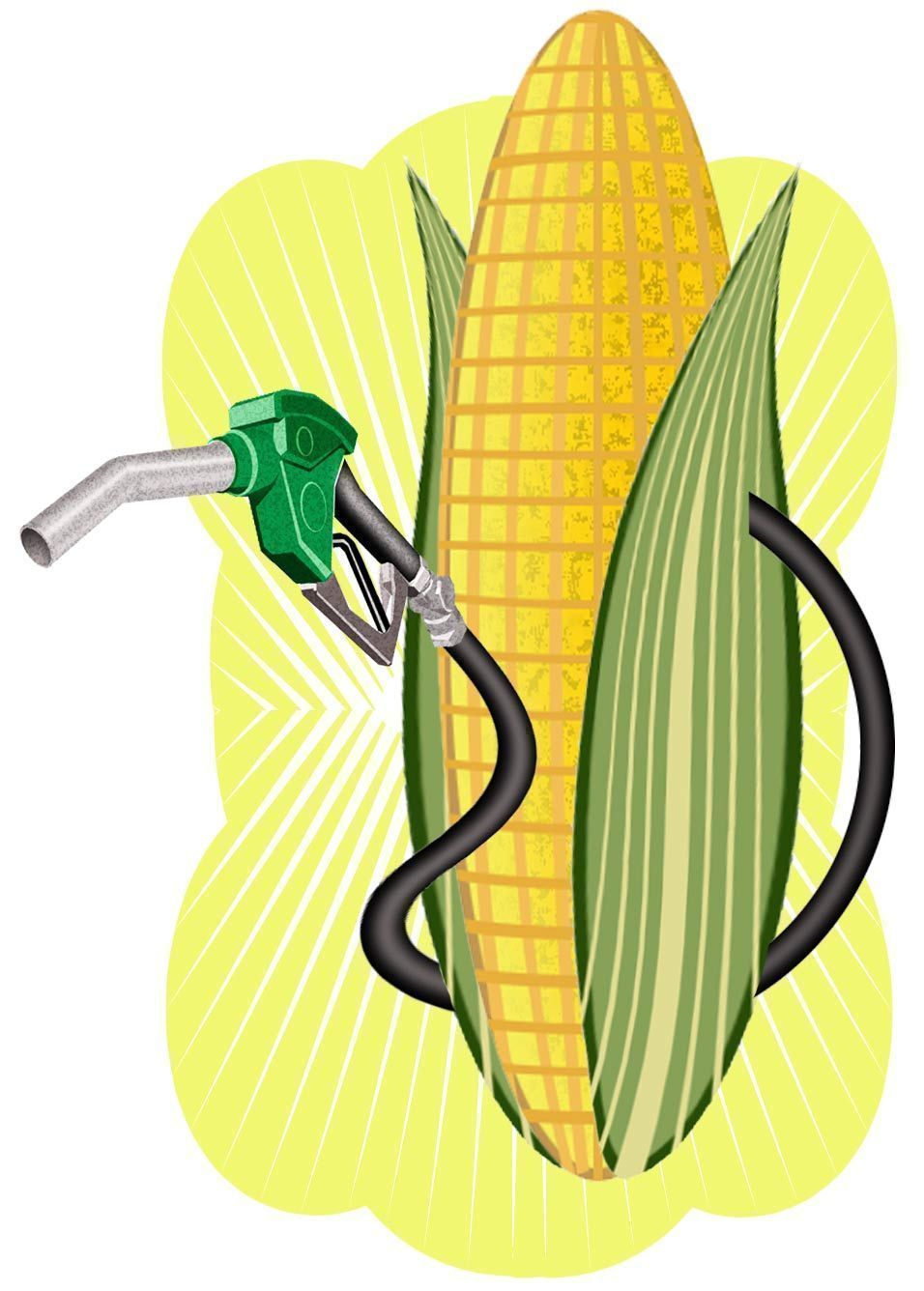
Biofuels


Food or Fuel? 

1. 


PRO
CONS
-sustainable alternative to fossil fuels
-fewer crops available for food
-reduced green house gas emissions
-world wide prices increase (50%),
-renewability
-affect the poor around the world
-energy independence
-37 countries may be facing food security

-food riots in countries such as Haiti and Egypt

-increase in aggregate fertilizer use leads to poor water quality, nutrient runoff and Erosion.

2. Do you think the pros outweigh the cons of using “food for fuel”?  Why or why not?

The pros most certainly do not outweigh the cons in this situation, unfortunately. Although the new ideas seem to be great for the environment in some aspects, it is hurting it in other ways. There is already a food shortage in most countries and by using food to create fuels means taking away even more food from those in need. With our growing world, it is becoming more difficult for people to produce enough food to feed everyone. Although this plan doesn’t really seem to work out, I believe that finding a new source of fuel is necessary for our world. 


The EU calls time on first-generation biofuels

1.      What is the E.U. proposing to do regarding “first-generation” biofuels?  Why?

Basically, they are trying to put a limit on the amount of biofuels that Europe uses. They want to cap it because they feel like “some of the biofuels are as bad as, or even worse than the fossil fuels that they replace”.

2. Why are biofuel proponents upset?  Are environmentalists upset too? 

 Biofuel proponents are upset because they think it’s sending the wrong message saying that the policy shows no policy coherence or predictability. In addition, there is now uncertainty of who is paying for the fuels because the first generation providers are out of the picture. 
Environmentalists are also upset because they feel that the EU missed a good chanced to fix mistakes from the past by admitting mistakes of the original first-generation fuels.

3. "Second-generation" biofuels 

Second-generation biofuels use the inedible parts of plants for energy. This way there isn’t any competition with getting food to people and using it for machinery.


Ethanol Fading? 

1. Why are times so gloomy for ethanol producers?

The droughts have been killing most of the crops, increasing the cost of the products, causining many ethanol plants to shut down. There are many barrels of ethanol just sitting in storage because there isn’t enough gasoline to mix it with. In addition to this, the value of ethanol has decreased because the gasoline prices aren’t too bad right now.

2. How is the ethanol plant in Macon, Missouri (owned by POET) changing to confront the changes in the ethanol market?

The plant in Macon is undergoing $13 Million in renovations, in hopes that it will make the plant more efficient and cost effective. With new technology, construction and ideas, the plant hopes to turn things around by producing an extra three-tenths of a gallon of ethanol per bushel of corn. 


EPA Proposals

1. Why is the EPA proposing to reduce the required amount of ethanol mixed with gasoline?

They say that most cars on the line can only take a certain amount of ethanol in the gasoline mixture, and that there isn’t a very high demand for the new fuel. Because of new ways to find oil such as fracking, using ethanol as an ulterior method isn’t as important any more. In addition, people who drive “flex-fuel” vehicles aren’t entirely sure how much ethanol they actually can use, causing sales to be lower then expected.


Tuesday, February 11, 2014

The Role of Agribusinesses in Food Systems

1.    


S    Schreiber Foods, Inc.


Schreiber Foods, Incorporated is a manufacturer of cheese that is used in fast food franchises, grocery stores, and food service operators. The headquarters is located out of Green Bay, Wisconsin, but the company is present in more than 20 countries. The privately owned corporation is the number one provider to grocery stores, food service operators, universities and hospitals with an average of $1.23 billion in annual sales. Schreiber Foods, Inc. main competition is with other companies that distribute raw and processed dairy products.


Wednesday, February 5, 2014

Agriculture Policy


A.1  How have government farms subsidies impacted the United States? The world? 

The farms subsidies seems like a burden to the United States and doesn't really help agricultural 
industry. First of all, the farms subsidies are huge amount of money which could be a large pressure
on tax-payers which includes both producers and consumers. Usually the farms subsidies kicks in 
when the price is low. It seems like a really nice deal but it could also cause overproduction which 
keeps the price low and harms the environment.

A.2  What would be the implications of eliminating subsidies? Consider both American farmers – of all types – and farmers in developing countries (e.g., countries in Africa) – who would benefit or be harmed by ending U.S. farm subsidies?  How?

Subsidies make the cost of producing in America easier and help the American farmers to keep the 
price lower then their competitors such as the foreign farmers. The difference in price makes the 
products from America more competitive than products from countries without farms subsidies in 
the global market.

B.1  Are there “crop subsidy”-type provisions in the CAP? If so, how do they compare to U.S. subsidies?
There is crop subsidy in CAP. Unlike the subsidies in U.S., which goes to ordinary farmers, it

only goes to the wealthy landowners and businessmen. 

B.2  Is the CAP viewed in the same light as U.S. subsidies?  Does it have the same type of economic impact or effects as U.S. subsidies?
      Many European countries seems benefit from CAP payments much more than the American 
      agriculture benefit from U.S. subsidies. 
      Manny European countries especially Western-european countries benefits from CAP a lot such as         France, the biggest agricultural producer in Europe. However, just like American subsidies, it also         cause the inequality in the price in global market.


C.1 What changes are being made to government policy for for milk, cheese, and butter prices?
The 70-year-old policy is abandoned and a bill will offer insurance to farmers to protect themselves from unexpected flow in price of milk and feed.