Tuesday, January 21, 2014

Genetically Modified Organisms


Garrett Lattanzio
1/21/14
INTAG 470
Genetically modified organisms


Based on:  UN/WHO, 20 Questions On Genetically Modified (Gm) Foods, http://www.who.int/foodsafety/publications/biotech/20questions/en/
1.      How does WHO define genetically modified organisms?  List any lingering questions or concerns about this definition

The WHO defines a genetically modified organism as one that has had its DNA altered artificially and does not occur naturally.  I think the way that they state “not occur naturally” is not accurate to a point.  Most of the traits do occur naturally in some organism, but just not in that specific organism that is being modified.
2.What are some of the policies and outlooks of the EU in relation to GMO’s?
    The European Union has very strong legislature against GMOs; for a GMO to be made available for use it must go through a rather complex process which involves the agreement by all EU countries.  There have been no GMOs allowed on the market since 1998 in the EU.  There is also mandatory labeling for any GMOs used in consumer food products within the EU. Basically the European Union is against most things involving GMOs.
3. What does the U.N.’s WHO say about GMOs’ environmental and food safety concerns?
In regards to human health and safety the FAO and the WHO have not found any GMOs that cause allergic reactions based on their research.  They also agree that the possibility of genes transferring from GMOs to humans is very unlikely.
As for the impact of GMOs on the environment, the WHO has found some cases where genes did transfer from GMOs to conventional crops.  Another concern is that with the introduction of GMOs we will lose some biodiversity in our agricultural commodities.
Based on: Amy Harmon, “A Race to Save the Orange by Altering Its DNA.”  The New York Times, July 27, 2013. (http://www.nytimes.com/2013/07/28/science/a-race-to-save-the-orange-by-altering-its-dna.html?pagewanted=all&_r=1&)
4. Briefly, describe the problem facing the Florida citrus industry, described in the article, that might be solved by GMOs.
There is a disease that reached Florida in 2005 which causes oranges to become sour and not ripe; the disease also stunts the growth of the oranges. This is a major problem since Florida produces much of our country’s orange supply.  They did not find a citrus tree which was immune to this disease, but there other species which carried a gene that made it immune to the disease.  The idea was to take this gene and splice it into the DNA of the orange crop, so that hopefully they would thus become immune to the disease thanks to their new gene.
5. The article mentions at least four possible sources for the gene that might save the Florida citrus industry.  Try to find these four sources (near the middle of the article) and list them.
-Two types of vegetables
-A virus
-A pig
6. Opinion:
a.  What is your opinion on whether GMO orange juice might gain consumer acceptance?
Like it said in the article people will either have to accept the fact that the oranges have been genetically modified or choose not to consume orange juice.  I think if people were given the facts about GMOs then they would accept the notion of their use in our food supply.  The media is biased against GMOs and people always believe what they hear from media without doing their own research, which is a shame.  I do think it will gain acceptance though because it will be the cheaper option for people compared to organic, and in today’s world saving money is a big deal.
b.  Is your answer affected at all the European Union regulation that all food products containing GMOs must be labeled?
No, I think that the EU is wrong in the way they treat GMOs.  Having done plenty of my own research into studies done on GMOs, I stand by the notion that the benefits outweigh the risks.  I think that they are just scared of using them because GMOs are rather new, but as more and more positive research comes out I think the EU will come to their senses.  I don’t think we need to label GMOs because until there is proof that any harm comes from them then they are no different than conventional products.
c. Is your answer affected by Whole Foods’s announcement that it will avoid stocking most GMO foods by 2018 (as noted near the end of the article)?
Again, the only reason Whole Foods is doing that is because they are taking advantage on society’s ignorance about GMOs. They think that this non-use of GMOs will draw in more consumers willing to spend more money on products just because they are “Organic” or “Non-GMO”.  And if people continue to stay in the dark about GMOs then companies like Whole Foods win because they can charge more money for “Organic, Non-GMO containing” products.
I think that people need to educate themselves about GMOs, and not just trust everything they hear in the news.  The fact of the matter is that most of the scientific community is in favor of GMOs.   They can see that GMOs have the potential to supply our growing population with a sustainable food source.  GMOs could eliminate certain problems which affect agriculture today such as, crops dying from: droughts, pests, weeds, and disease.

GMO blackberry vs organic blackberry


Personally I would rather have the one on the left which is cheaper and greater in volume.

Thursday, April 18, 2013

More from NPR: The link between antibiotic-resistent bacteria and livestock practices

Today's Salt story (here) notes a large government study of supermarket meat samples.  It says:

The findings, released through the joint program of the Food and Drug Administration, the Department of Agriculture and the Centers for Disease Control and Prevention, got little attention when they were published in February. But this week, the Environmental Working Group, which opposes some of the livestock industry's use of antibiotics, analyzed the government data and highlighted some of their startling implications in a report.
 
The link for EWG's report is here.  It says

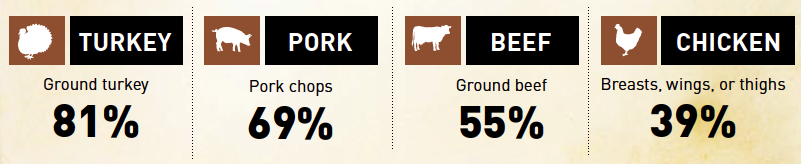
that government tests of raw supermarket meat published last February 5 detected antibiotic-resistant bacteria in:
Detected Percents
 
Further, EWG notes,
 
Today, pharmaceuticals sold for use on food-producing animals amount to nearly 80 percent of the American antibiotics market, according to the Pew Campaign on Human Health and Industrial Farming.
 

Wednesday, April 17, 2013

New research on "reducted sodium" food labels

A University of Toronto study suggest that consumers value reduced-sodium claims, even if food companies worry that consumers will stay away from low-sodium products.
Nutrition fact labels are good but confusing, consumers say.

See the story on NPR's Salt blog here.

Tuesday, April 9, 2013

Food Labels


What's in a Food label?

The FDA has strict regulations on what to put on a food label and the claims that can be made. The FDA requires that the package includes: name of food, net weight, name and address of manufacturer or distributor, ingredients listed descending by weight, nutrition info for specific nutrients per serving, and the presence of common allergens. The FDA allows 3 types of claims nutrient content, structure/ function, and health. Nutrient content claims describe a nutrient level or amount and must adhere to strict criteria for the following terms: free, high, low, lean, reduced, and good source of. Structure/ function claims describe how a nutrient or compound affects body structure or function and does not require FDA pre-approval.
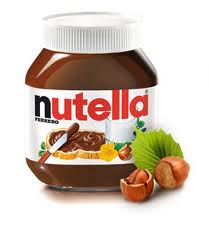
Health claims to be made on a corresponding disease or condition require FDA approval which is a burden on the company to provide. These claims can be very costly for a company if they publish information on a product that is misleading. The company that makes Nutella Ferrero USA, Inc got sued for misleading consumers into thinking that it was a healthy nutritious breakfast food. The settlement included cost the company $3.05 million with $2.5 million to be divided among consumers who file a claim, the New York Daily News reported.  As part of the settlement, anyone in the U.S. who purchased Nutella between certain dates received $4 for a single purchase and up to 5 jars for a maximum award of $20 per household.


The meaning behind some front-of-package symbols

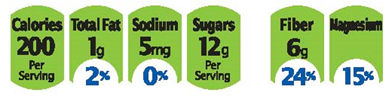
Simple front of package (FOP) labeling symbols are voluntary but are more effective and especially valuable to populations with low literacy, low health motivation, and limited nutrition knowledge. Critical components: calories, saturated and trans fats, sodium, and added sugars. The symbol. For a package to display the USDA organic symbol it must contain at least 95% organic ingredients.


Tuesday, April 2, 2013

Food, Diet, and Health

Americans tend to think of starvation and malnutrition as an issue that developing countries face. What people do not realize however is that many Americans are also malnourished, or over-nourished, causing an epidemic of heart disease, and diet related deaths across the nation. In the “Dietary Guidelines for Americans” published by the U.S department of Agriculture and the department of Health and Human Services, the main component to the epidemic is a poor diet (lack of nutrients) and a lack of physical activity.
  

As stated, "Calorie balance is key to maintain a healthy weight." When consumers resort to eating a diet primarily based on heavily processed foods, they without a doubt are over consuming the number of calories their body needs on a daily basis. 
 The main foods and nutrients that most people need to increase in their diet are, to no one’s surprise, fruits and vegetables, including dark greens, red and orange vegetables, beans, and peas. 


According to "Dietary Guidelines for Americans", the top 5 diet related diseases are no mystery to current health professionals. Cardiovascular disease, hypertension, type 2 diabetes, osteoporosis, and various types of cancer all contribute to the overall obesity in the nation and are some of the leading causes of death. 

The devil behind the diseases is no mystery to dietitians. It is not surprising that our nation is suffering from such chronic health diseases related to food. In fact, some of the most popular food consumed, coincidentally also has the highest number of calories. The top ten sources of calories for "overall" consumers above the age of 2 are: 

1. Grain-based desserts (cake, cookies, pies, sweet rolls (Twinkies), pastries
2. Yeast breads (including wheat bread)
3. Chicken and chicken mixed dishes
4. soda/energy/sports drunks (Gatorade, Red Bull, Coke)
5. Pizza
6. Alcoholic beverages
7. Pasta and pasta dishes
8. Tortilla, burritos, tacos
9. beef and beef mixed dishes
10. dairy desserts (ice cream) 


It is clear that Americans are not eating nearly enough of the foods which best provide the daily recommended vitamins and minerals that “Dietary Guidelines for Americans” suggest. Currently, Americans are eating 75% of the total calcium they should consume. It would not be very difficult to reach 100% calcium because it can be found it some of our favorite dairy products, and even dark green vegetables such as spinach or kale. The most difficult category of food where Americans are only consuming 15% of the recommended daily intake is whole grains. Part of the reason is consumers are often fooled by labels into thinking they are eating whole grains. Labels such as "wheat bread" or even "whole wheat flour" do not actually come from whole wheat grains. Some recommended whole grain foods are, brown rice, buckwheat, millet, quinoa, and whole oats. The difficulty in getting more of these foods into our diet is often price and availability at our local stores. Ironically, a lot of whole grain products are more readily available in more underdeveloped nations where the grains are considered a staple to one's diet.
        

What’s probably saddest of all is the fact that foods that Americans should eat less of, or avoid altogether, are often the staples of almost every American meal. Sodium, saturated fat, refined grains, and calories from solid fats and added sugars are ingredients in which we exceed the recommended intake. The most difficult one to cut down on appears to be sodium, of which Americans consume an average of 149% of the recommended daily intake, in various foods. Sodium appears to be everywhere from baby food, to smoothies, to TV dinners. It is hard to escape, unless an honest effort is made. Calories from solid fats and added sugars can be controlled just by looking at the ingredients label of a product and making substitutions. Whatever types of food you enjoy the most, you can easily make accommodations in order to avoid added sugars.  An effective strategy is to avoid heavily processed foods. If you are craving something sweet, eat fruit with natural sugars as oppose to fruit snacks. If you are craving a big ball of butter, opt for nuts or nut butter.


 VS

While the people of the U.S struggle with food choices, our neighbors in western Europe are also following similar patterns, with some exceptions. Studies done on the Mediterranean diet (Spain and Greece) show that the people consume almost double the amount of caloric vegetables that the U.S consumes. Greece also consumes double the amount of fruit compared to people in the United States.

The statistics on the obesity epidemic are more than shocking. 72% of all adult men in the U.S are considered overweight or obese. Women come in at 64%. This means that 1 in every 3 adults are on the road leading to chronic disease and unexpected death.  The best response to our nation’s health problems would be for all Americans to improve our diets, consume a balanced calorie intake, avoid sugars and processed foods, engage in more exercise and take a serious look at what is on the shelves of our pantries.